

In short
AI makes parts of creative and technical work faster. It does not know your brand or your customers, and it does not know when it is wrong. We pair it with 25+ years of design, development and infrastructure experience, keep the source tools in hand, and put a person over every output to check it, reprompt it or fix it by hand.
Why does experience matter more with AI?
We have spent more than 25 years as creatives and technologists. In that time the tools changed many times. Hand-built pages gave way to content management systems. Desktop publishing moved into cloud design tools. Single servers became cloud platforms, and manual production became automation.
Each shift made some of the work faster and moved the hard part somewhere else. AI is the same kind of shift. It can draft a page, write a function or render a product scene in minutes. Deciding whether the result is right still takes someone who has done the work the long way.
You can only review what you understand. A developer who has debugged production systems can tell which generated code looks fine and will fail later. A designer who has sent files to press can see when a generated carton has the wrong proportions. That judgment comes from years in the craft, and it is what makes AI output safe to use.
What does human oversight look like in practice?
Every AI-assisted job at Creartful runs through the same loop.
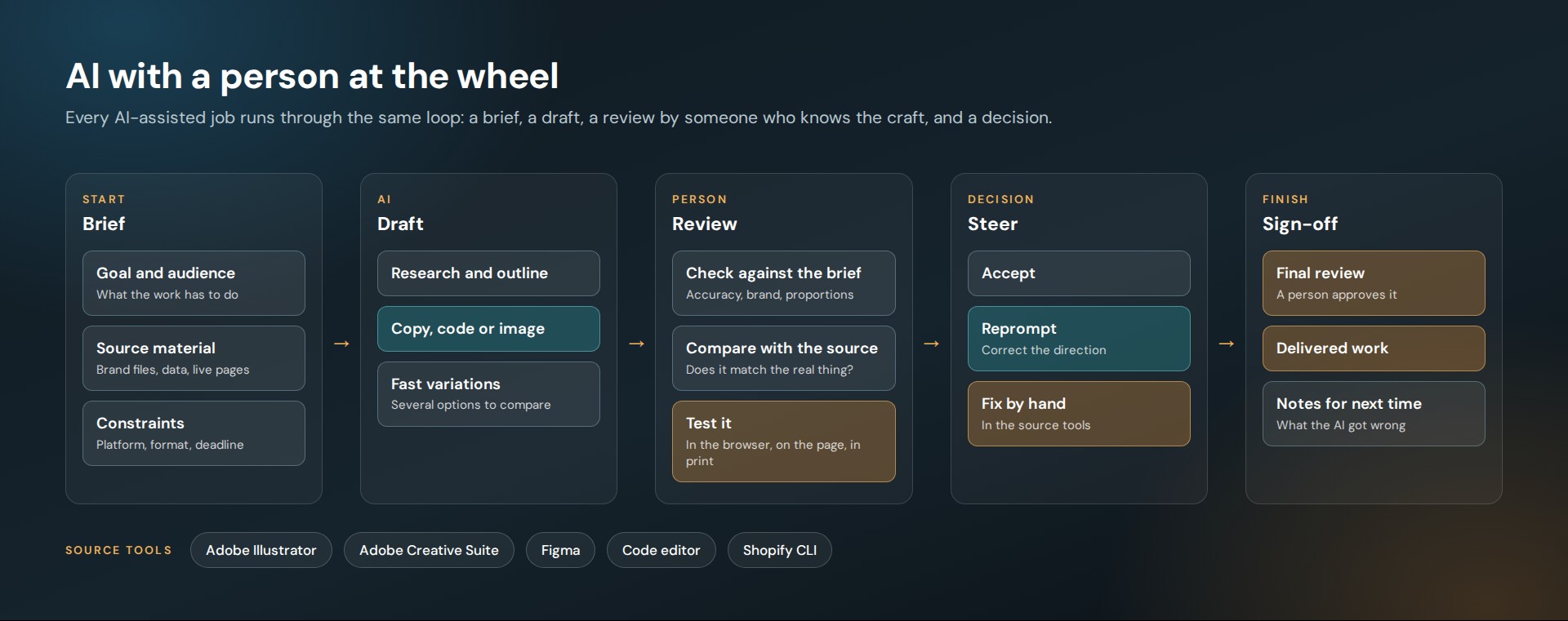
- Brief. A person defines the goal, the audience, the source material and the constraints.
- Draft. AI produces research, copy, code or imagery, often as several options to compare.
- Review. A person checks the draft against the brief and against the source. Is it accurate? Is it on brand? Is it the right shape? Does it work in the browser?
- Steer. There are three choices: accept it, reprompt with a correction, or fix it by hand in the source tools.
- Sign-off. A person approves the final work. Nothing ships on the AI’s say-so.
What happens when the AI gets it wrong?
Here is a recent example. We staged packaging for Cedarlane’s frozen meal lines in AI-generated photo scenes. The first results looked convincing, and they were wrong. The cartons came out tall and narrow. The real cartons are wide and flat.
Anyone who has worked with the dielines sees that at once. The AI had no way to know. So we measured the front panels, gave the model the proportions in numbers, supplied the front-panel artwork as reference and regenerated until the cartons matched the real thing.
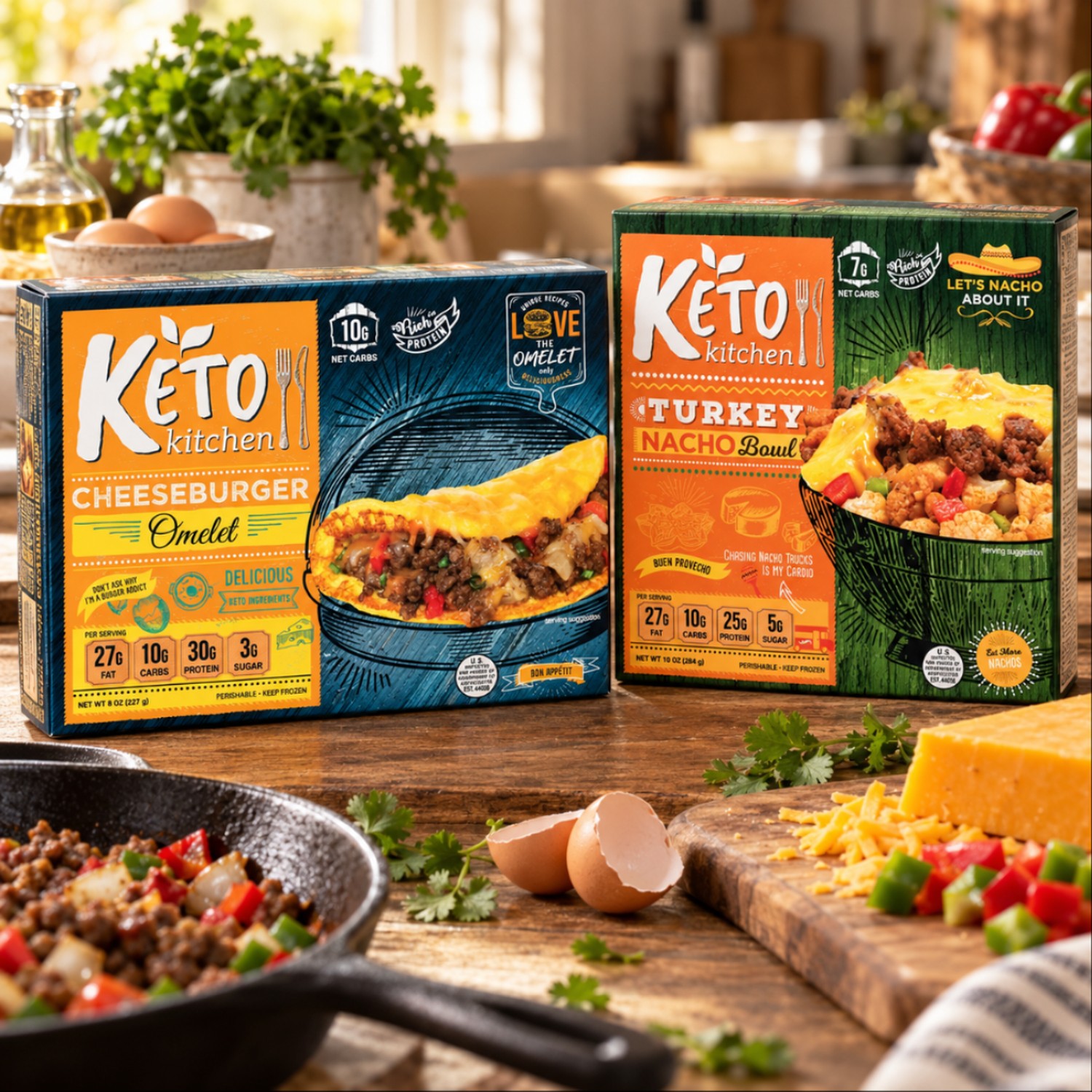
The full process is in From Dieline to Photo Scene, and the finished work is in the Keto Kitchen and Cedarlane Tamales case studies.
Why do we keep the source tools in hand?
AI output is a starting point more often than it is a finished file. Print-ready label art is still built in Adobe Illustrator. Theme changes are still read line by line and tested on a development theme before they go live.
When a prompt cannot get a detail right, it is usually quicker to open the source file and fix it than to keep asking. Knowing both routes lets us pick the faster one for each task.
Where does Creartful use AI today?
- SEO and content. Collection content, titles, meta descriptions and structured data across a whole catalog, as in our Vissla work.
- Development. Theme and template work with Claude Code, Shopify CLI and MCP connectors. See what AI-driven theme development looks like.
- Data. Product and variant data pulled from live pages to feed sale campaigns and email builds.
- Imagery. Product scenes and environments generated from real label and packaging art.
The full list is on the home page under AI capabilities.
What stays with a person?
Strategy, design decisions and final review. AI can suggest ten directions. Choosing the one that fits the brand, the budget and the customer is the job we are hired for.
Want AI in your workflow with someone experienced checking the output?
Start a projectFrequently asked questions
Does Creartful use AI on client projects?
Yes. We use AI for research, content, code, data extraction and imagery, and an experienced person reviews every output before it ships.
What does human oversight of AI mean?
A person sets the brief, checks the AI’s output against the brief and the source material, then accepts it, reprompts with corrections or fixes it by hand. Nothing ships without a person signing off.
Can Creartful still do the work without AI?
Yes. We have 25+ years of experience with the source tools for design, development and infrastructure, and we use them whenever they are the better route.