
Epic Distribution


Sales and Spec Sheet System
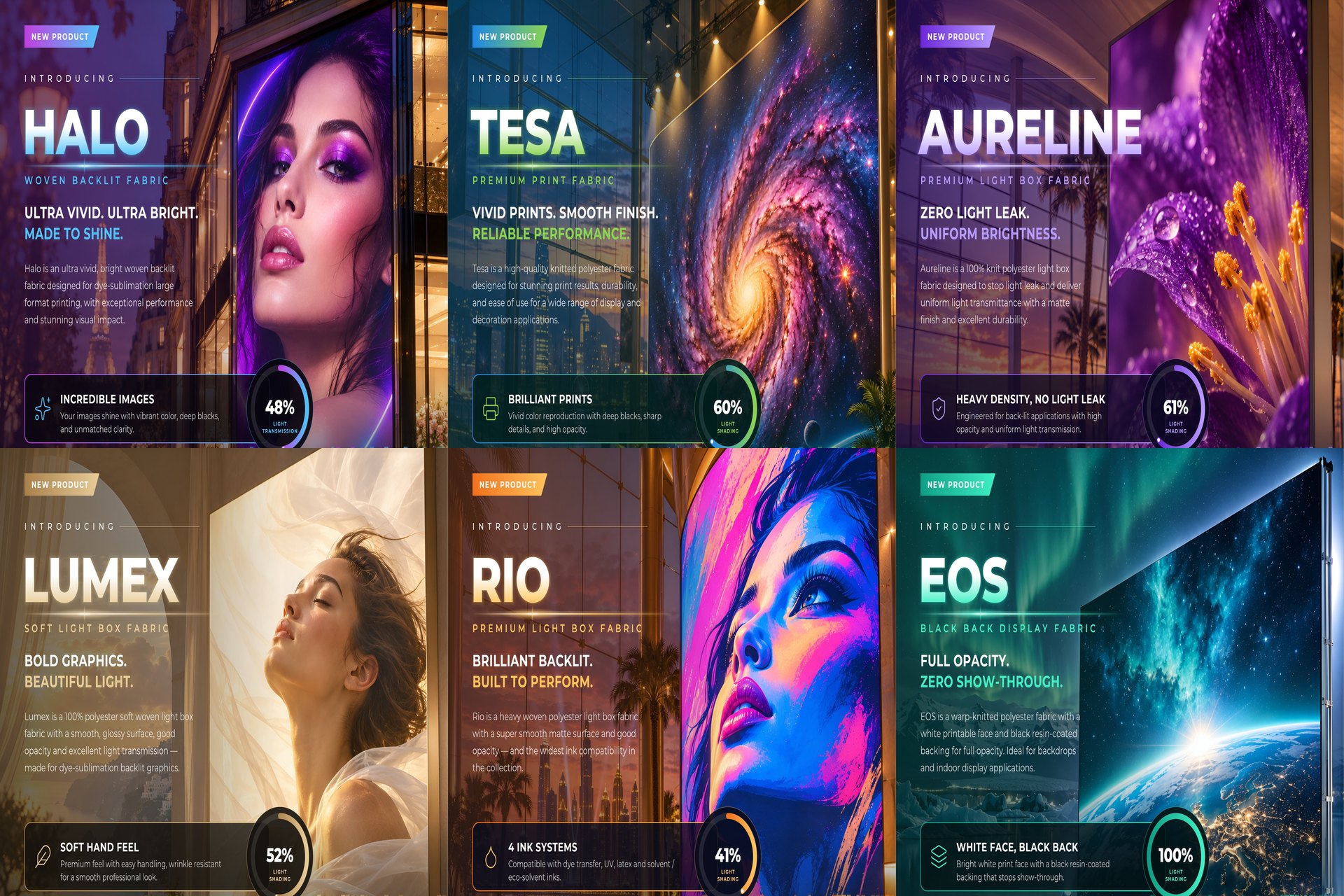
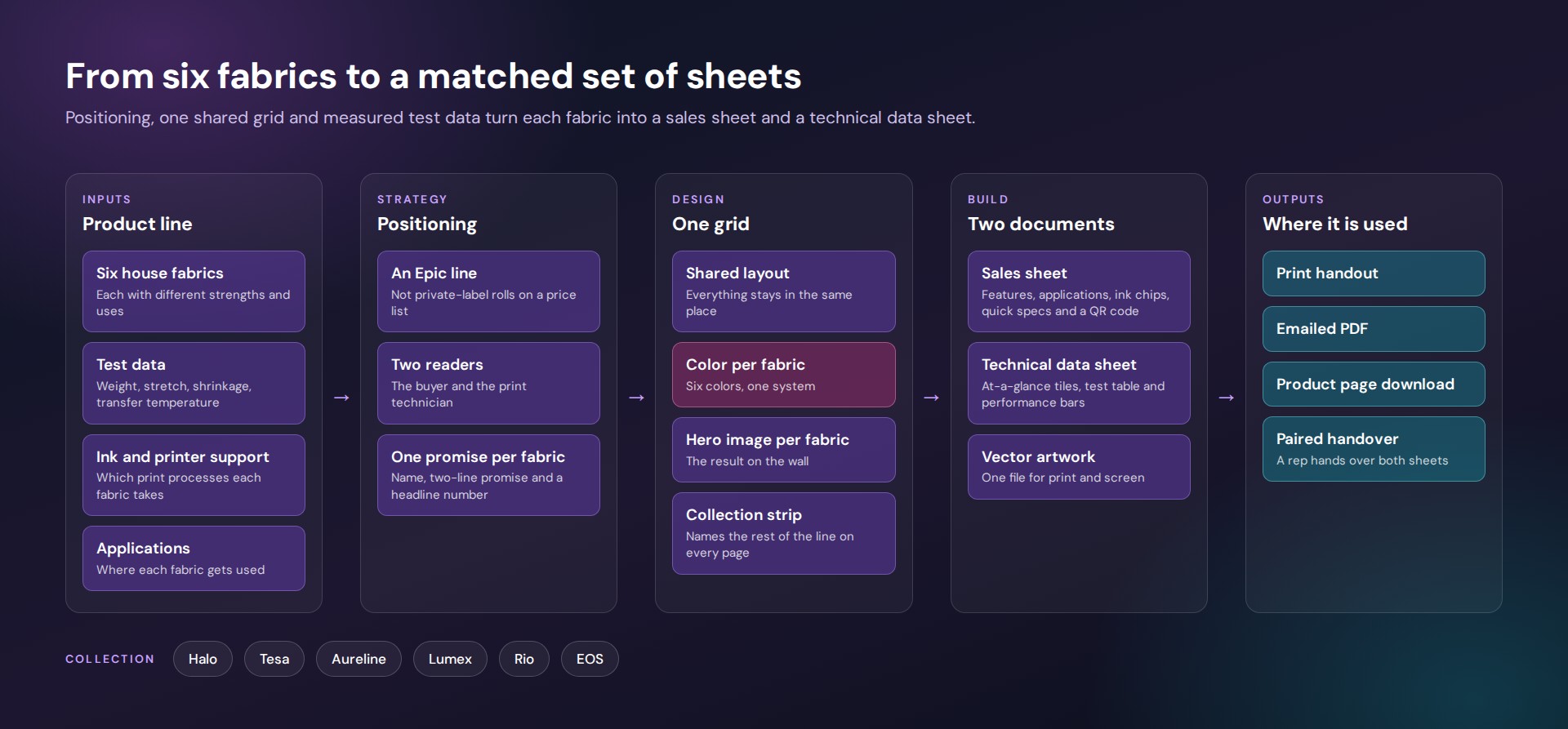
Epic Distribution has supplied large format print media out of Anaheim for years. With six fabrics of its own now in the catalogue, it needed collateral that presents them as an Epic line and not as a few private-label rolls on a distributor price list. We designed a matched set of sales sheets and technical data sheets for the Epic Performance Textile Collection: Halo, Tesa, Aureline, Lumex, Rio and EOS.
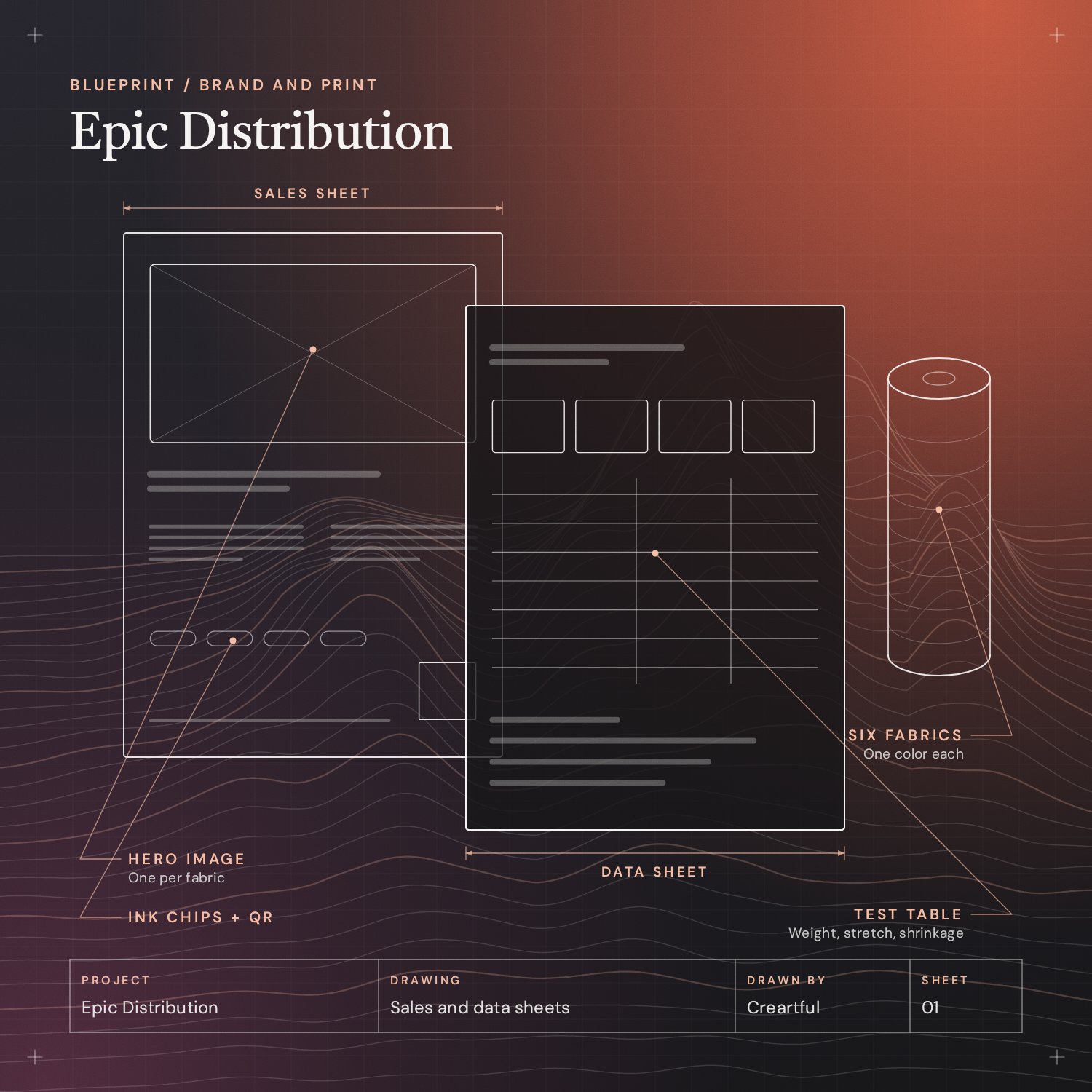
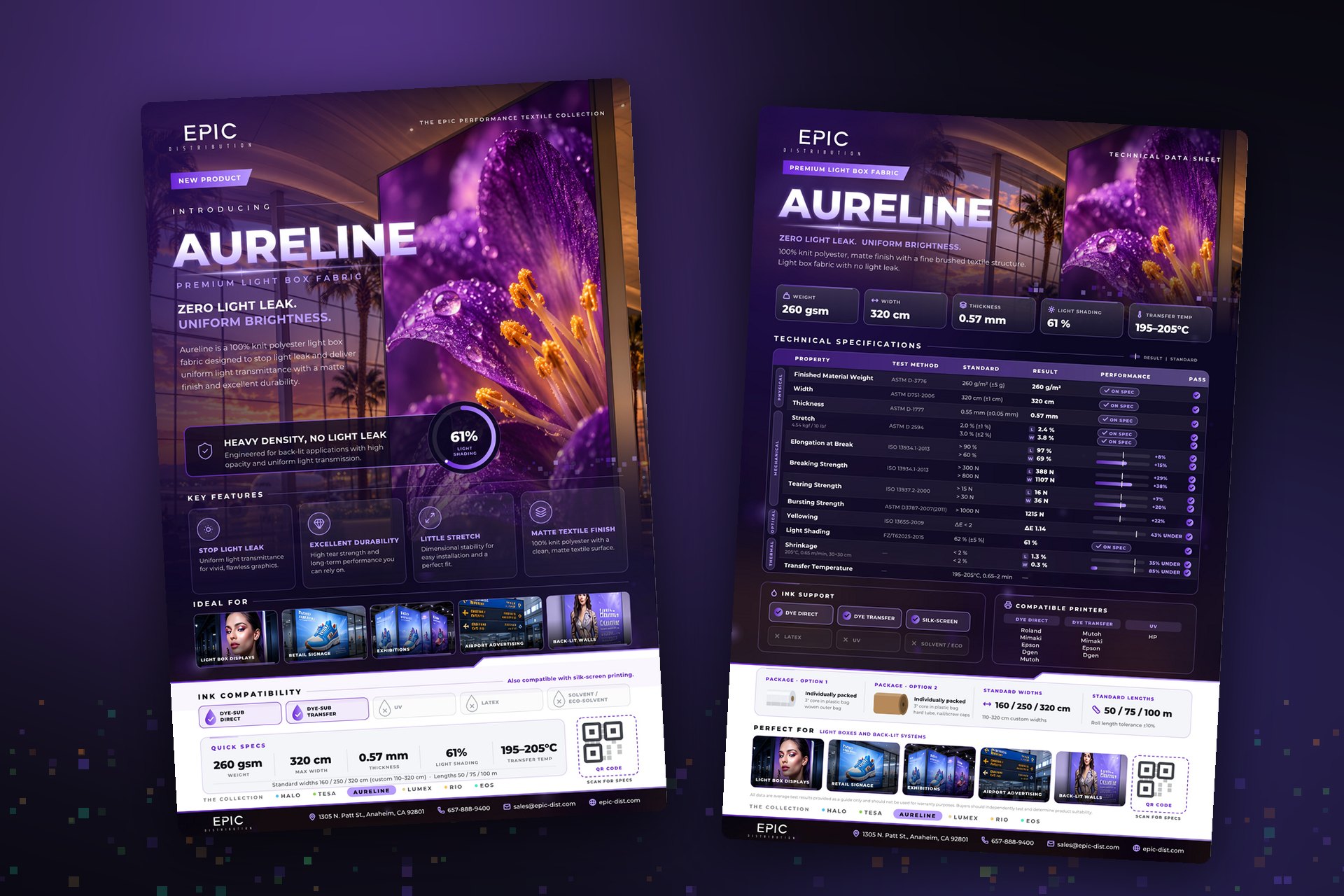
Every fabric gets two documents built on one grid. The sales sheet sells the result on the wall, and the data sheet gives a print shop the numbers it needs before it commits to a roll. Both are vector-built, so the same artwork works as a print handout, an emailed PDF and a product page download.
The route
How this project climbed.
- 02Blueprint Base Camp
Six house fabrics and their test data: weight, stretch, shrinkage and transfer temperature.
- 03Moodboard Meadow
Positioning as an Epic line, with one promise and one color per fabric.
- 04Wireframe Switchbacks
One shared grid for two readers: the buyer and the print technician.
- 05Commit Ridge
A sales sheet and a technical data sheet for each fabric, built as vector artwork.
- 08Go-Live Summit
Print handouts, emailed PDFs and product page downloads, handed over as a pair.
Task
Epic Distribution is known as a distributor of other manufacturers' print media. Its own fabrics needed to stand apart from that catalogue and read as a developed product line with a name, a look and published test data. The challenge was to design one template that could hold six different fabrics, each with different strengths, ink systems and applications, and still feel like a single collection. The sheets also had to serve two readers: a buyer deciding which fabric suits a job, and a print technician checking weight, stretch, shrinkage and transfer temperature against a spec.
Epic Distribution has supplied large format print media out of Anaheim for years. With six fabrics of its own now in the catalogue, it needed collateral that presents them as an Epic line and not as a few private-label rolls on a distributor price list. We designed a matched set of sales sheets and technical data sheets for the Epic Performance Textile Collection: Halo, Tesa, Aureline, Lumex, Rio and EOS.
Every fabric gets two documents built on one grid. The sales sheet sells the result on the wall, and the data sheet gives a print shop the numbers it needs before it commits to a roll. Both are vector-built, so the same artwork works as a print handout, an emailed PDF and a product page download.
Project Overview
One System, Six Fabrics
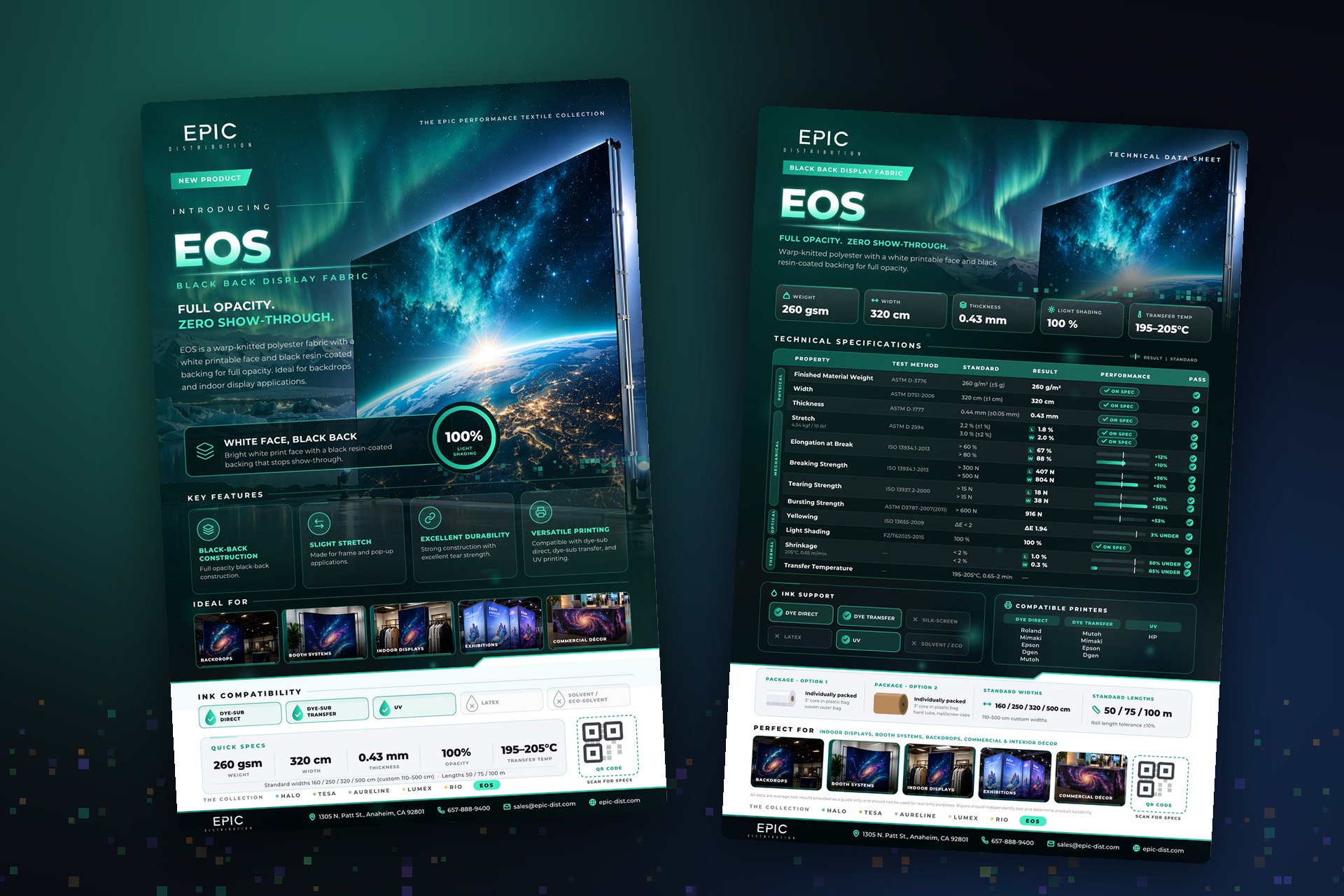
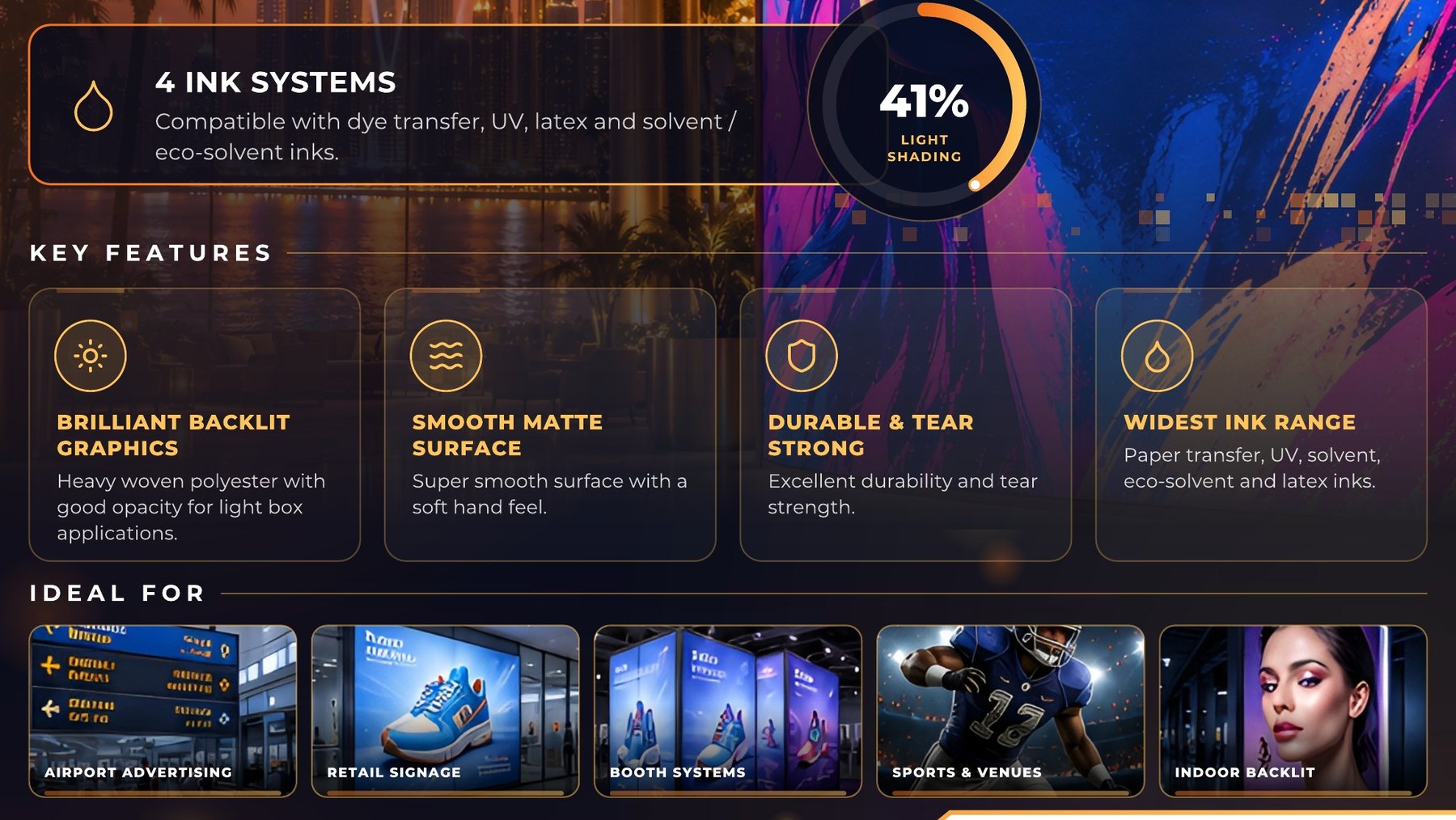
Each fabric has its own color and its own hero image, and everything else stays in the same place. A buyer who has read one sheet already knows how to read the other five. The collection strip at the foot of every page highlights the current fabric and names the rest of the line, so no sheet stands alone.
Sales Sheets
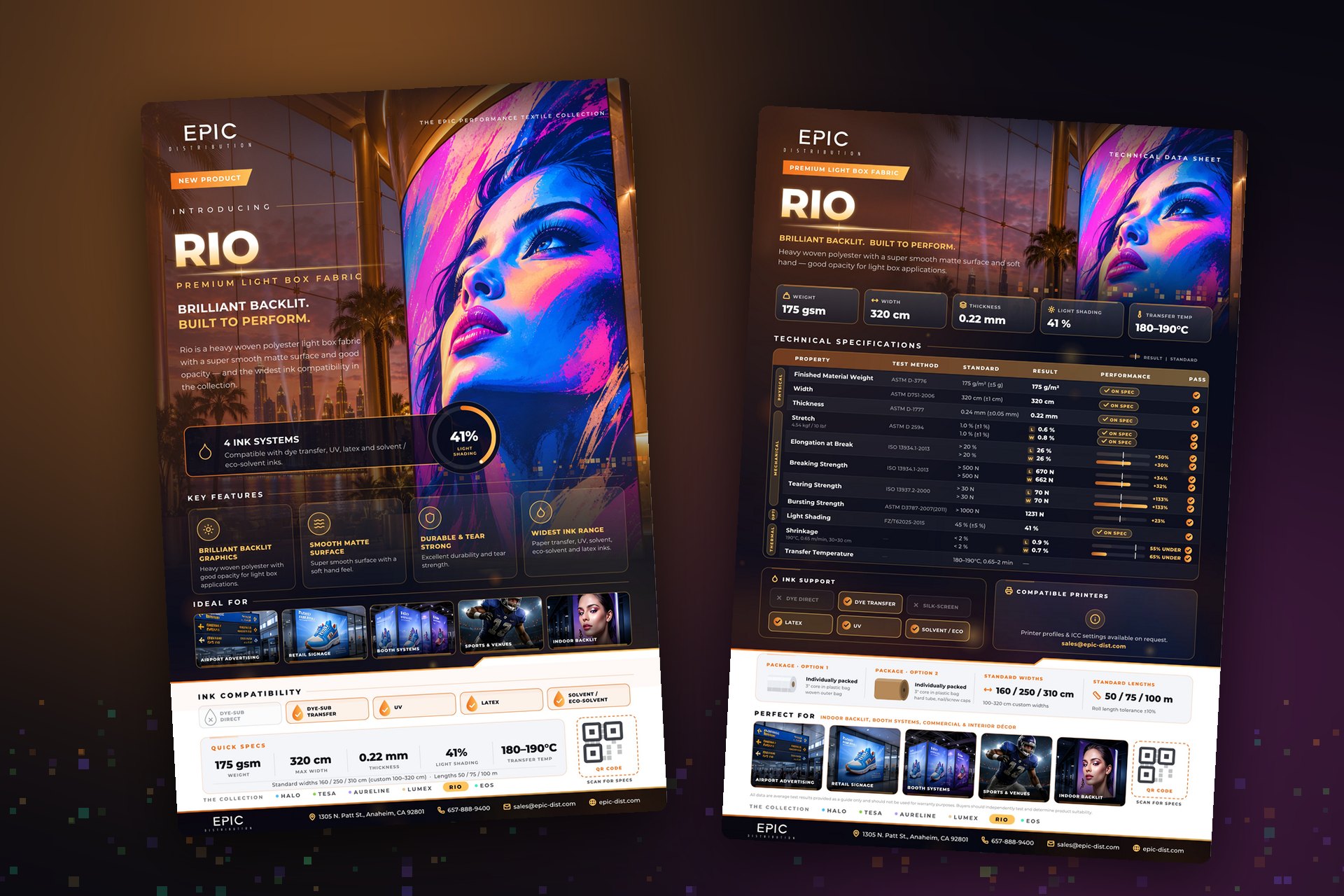
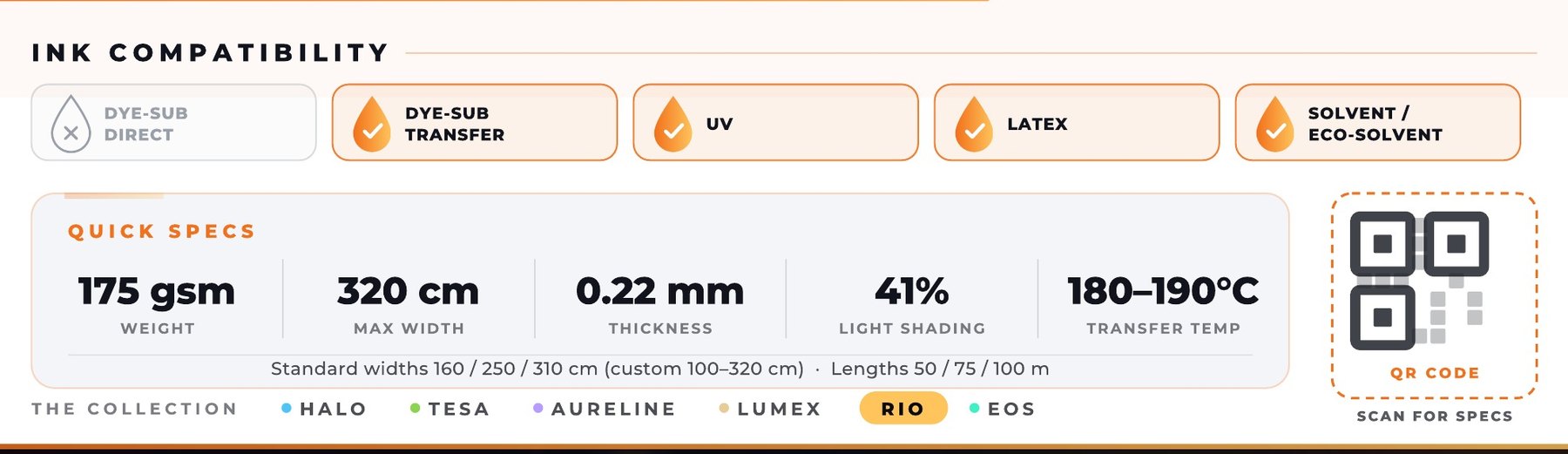
The sales sheets lead with the product name, a two-line promise and one headline number. Below that sit four key features, five typical applications shown as finished installs, an ink compatibility row and a quick specs bar. A QR code links each sheet to its full specifications.
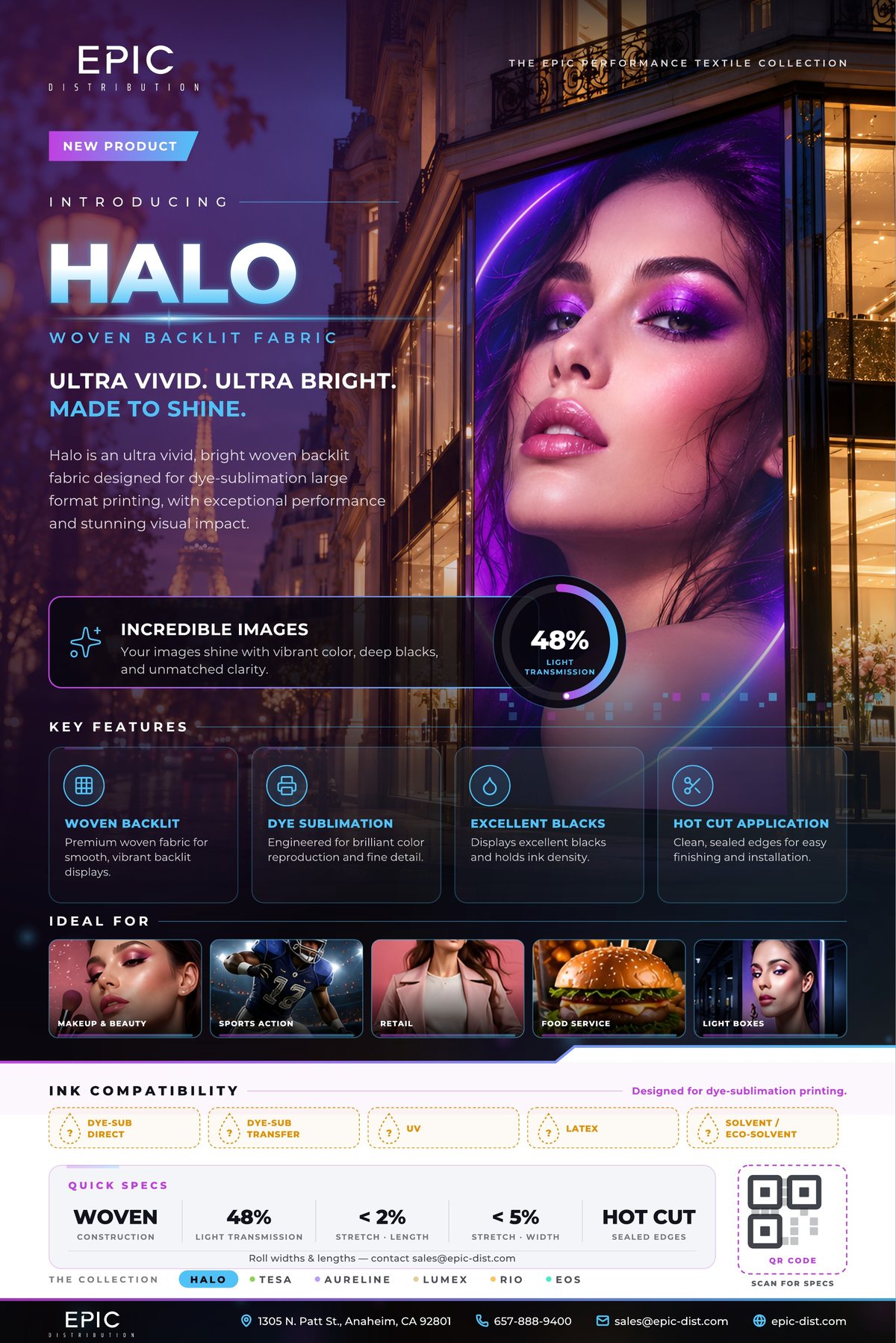
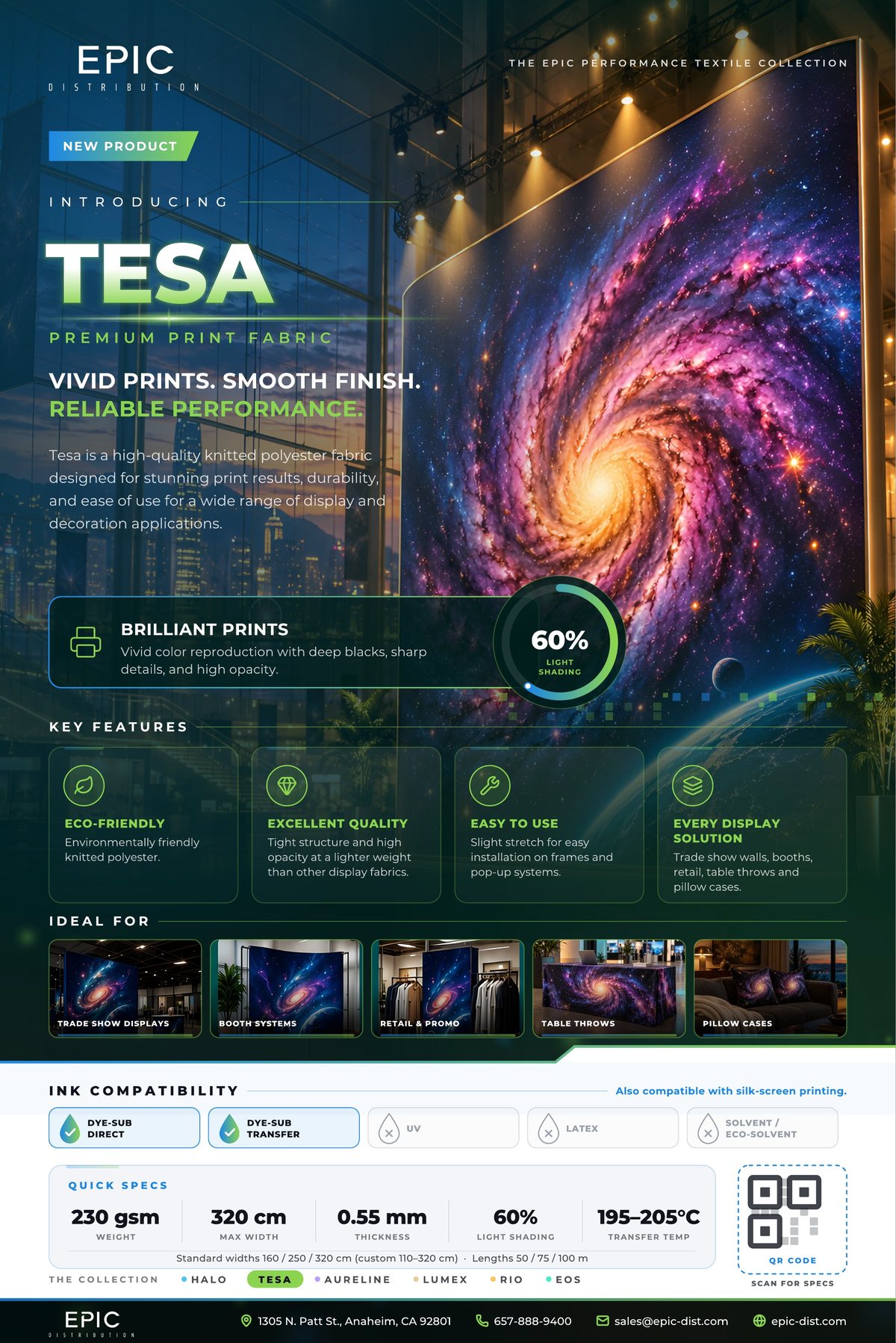
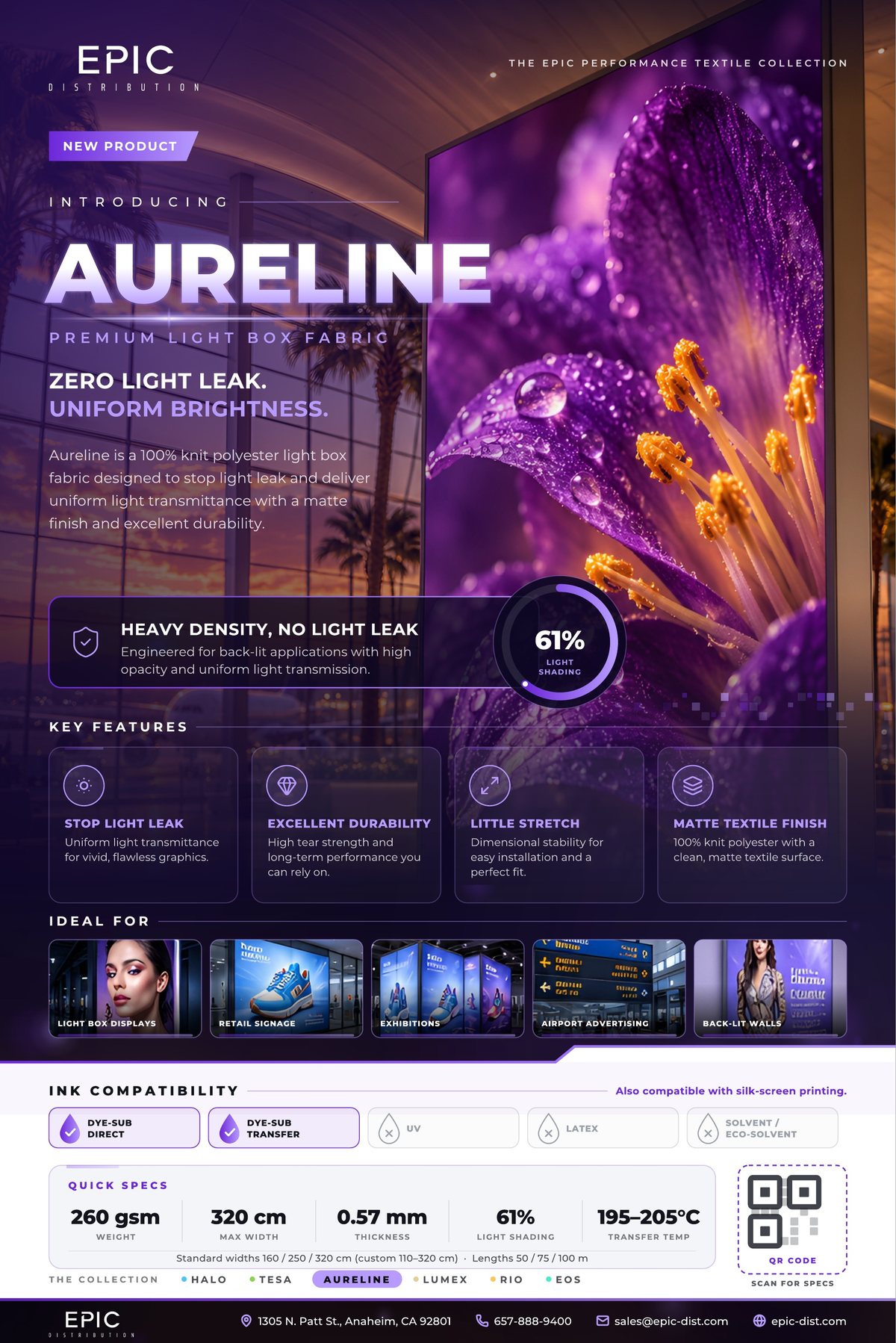
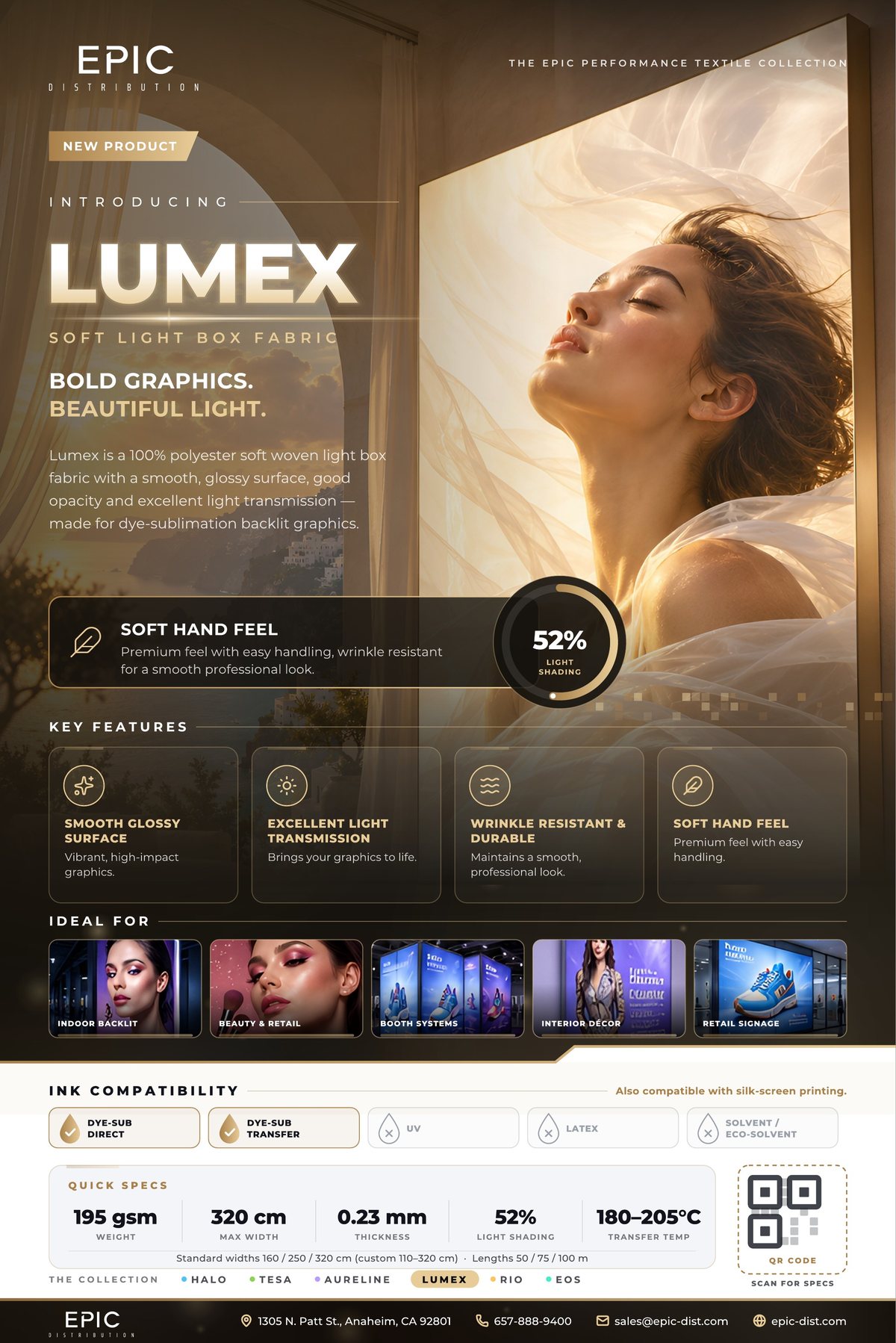
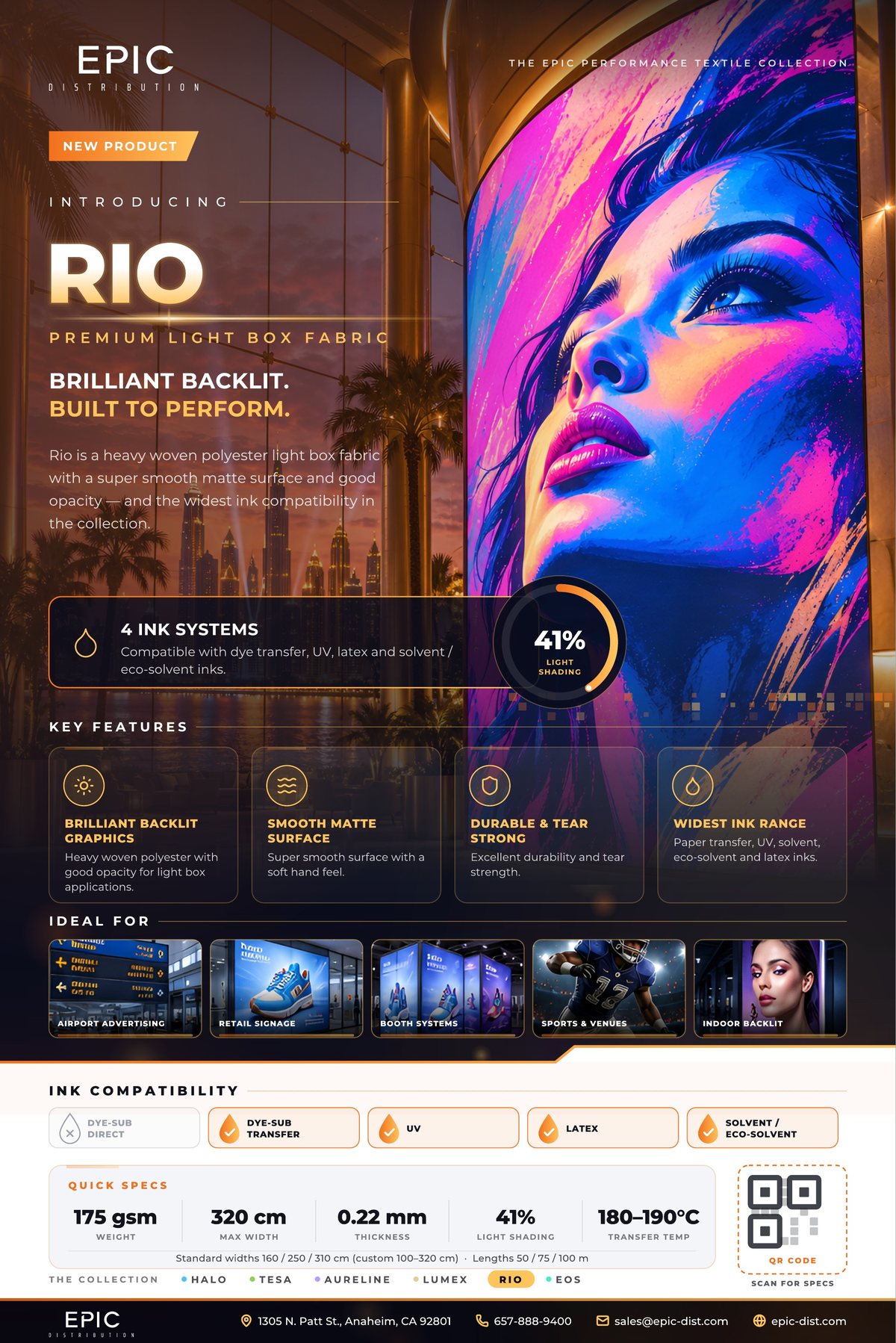
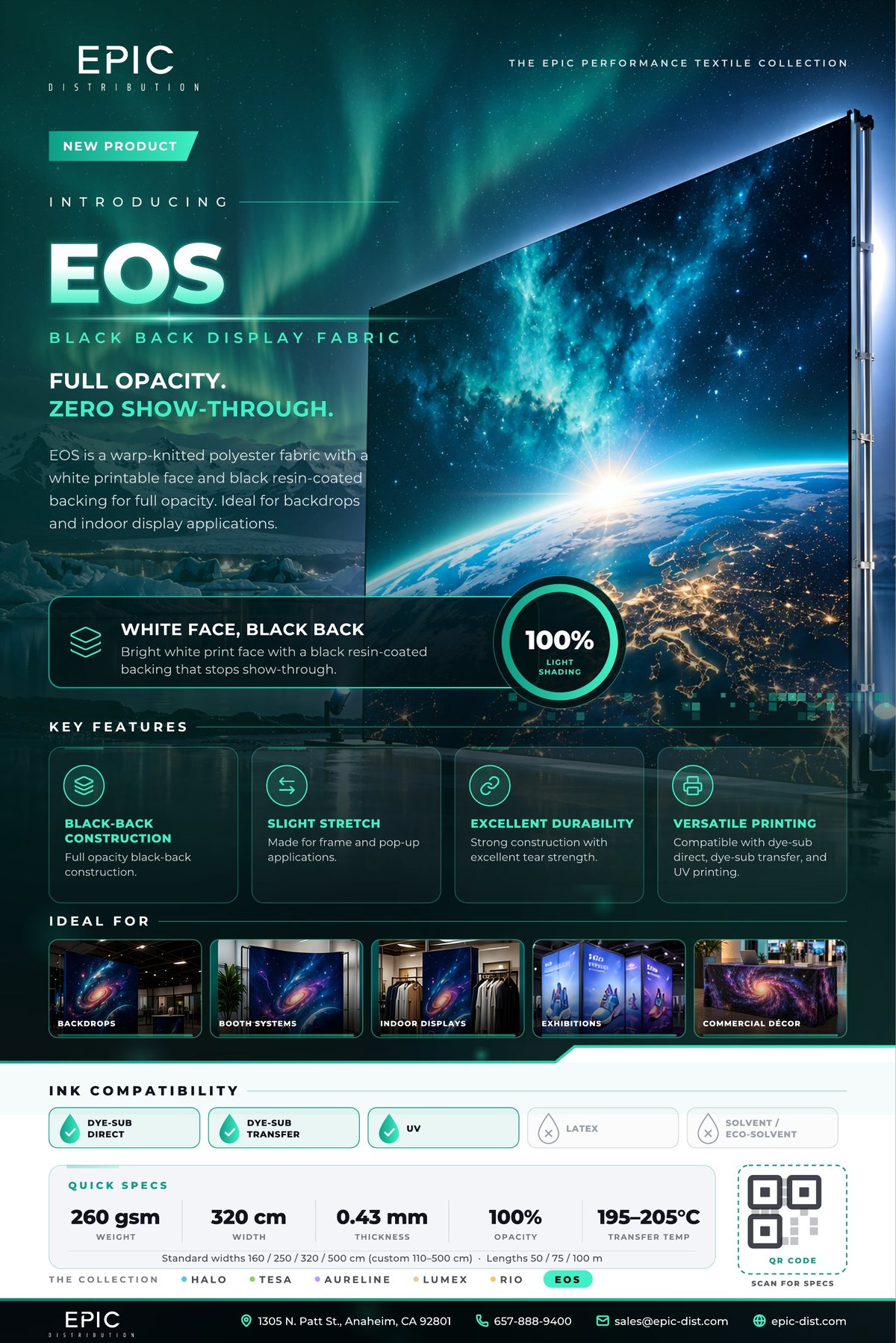
The feature cards and application thumbnails answer the two questions a print buyer asks first: what the fabric does well, and where it gets used.
Ink compatibility is shown as on and off chips in place of a paragraph of fine print, so a shop can check its own print process at a glance.
Technical Data Sheets
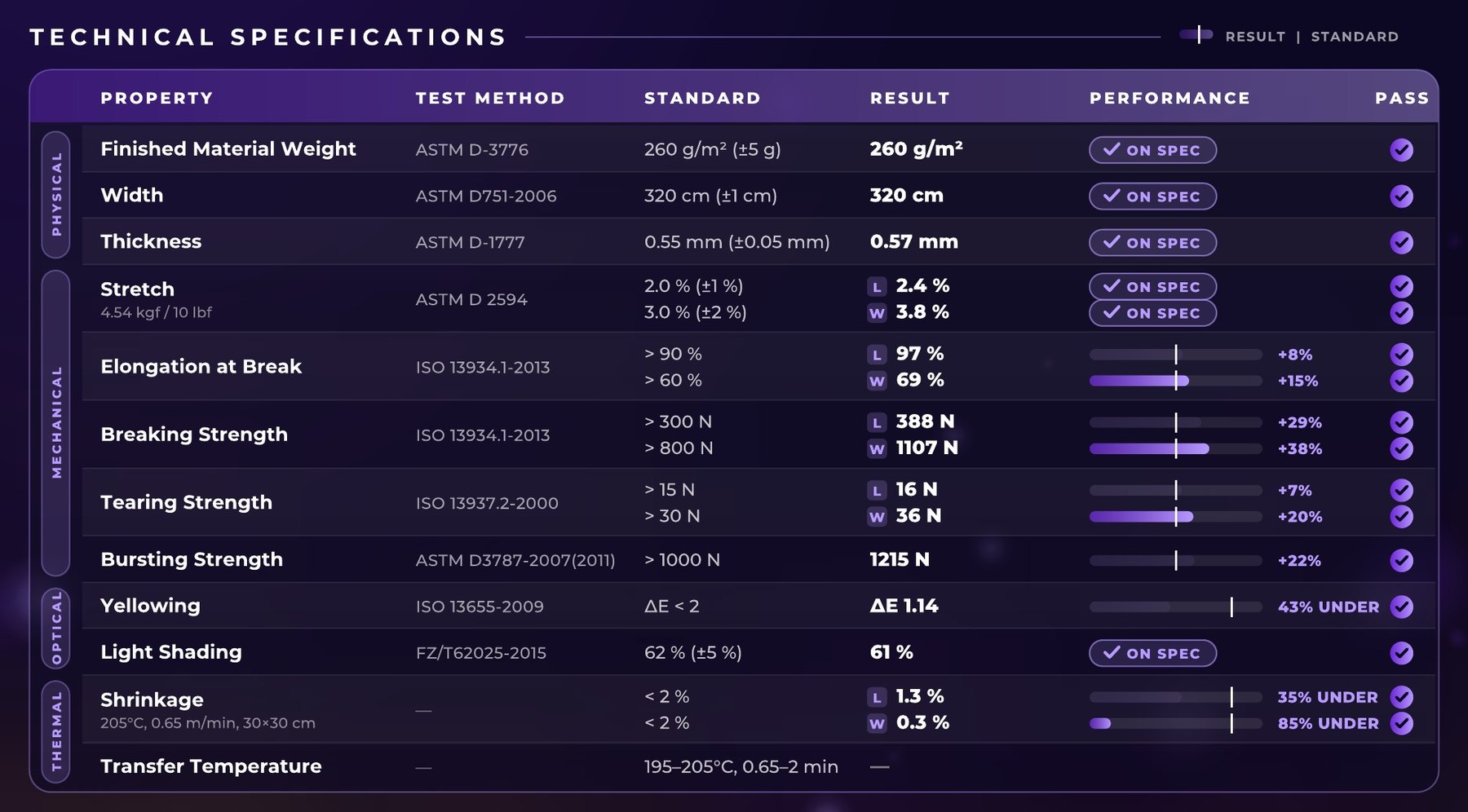
The data sheets carry the same header and color as their sales sheet and replace the pitch with measured results. Five at-a-glance tiles cover weight, width, thickness, light shading and transfer temperature. The main table then lists every property with its test method, the standard, the result and a pass mark.
The performance column is the part we spent the most time on. It plots each result against its standard as a bar, so a reader can see how far a fabric clears the requirement without comparing two columns of numbers.
Ink support, compatible printers, packaging options and roll sizes sit under the table, which keeps the ordering details on the same page as the test data.

Built as a Pair
Sales sheet and data sheet are designed to travel together. They share a hero image, a palette, the application thumbnails and the footer, so a rep can hand over both and they read as one piece of the same brand.